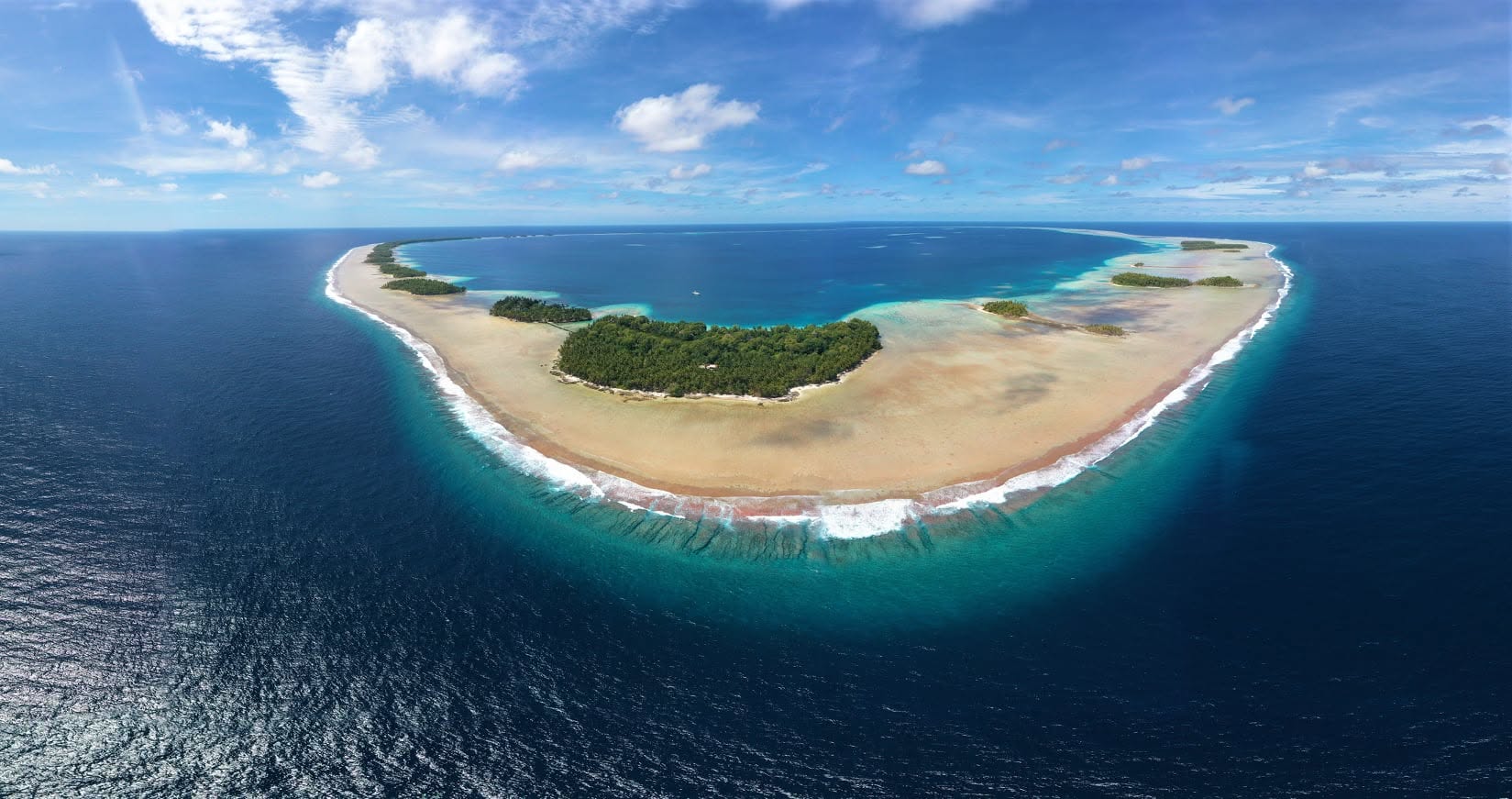
The Federated States of Micronesia are based in the western Pacific Ocean, spread across more than 600 islands and four states – Pohnpei, Kosrae, Chuuk, and Yap – with a population of 114,000 people. Health data was siloed to each of these states.
What was needed
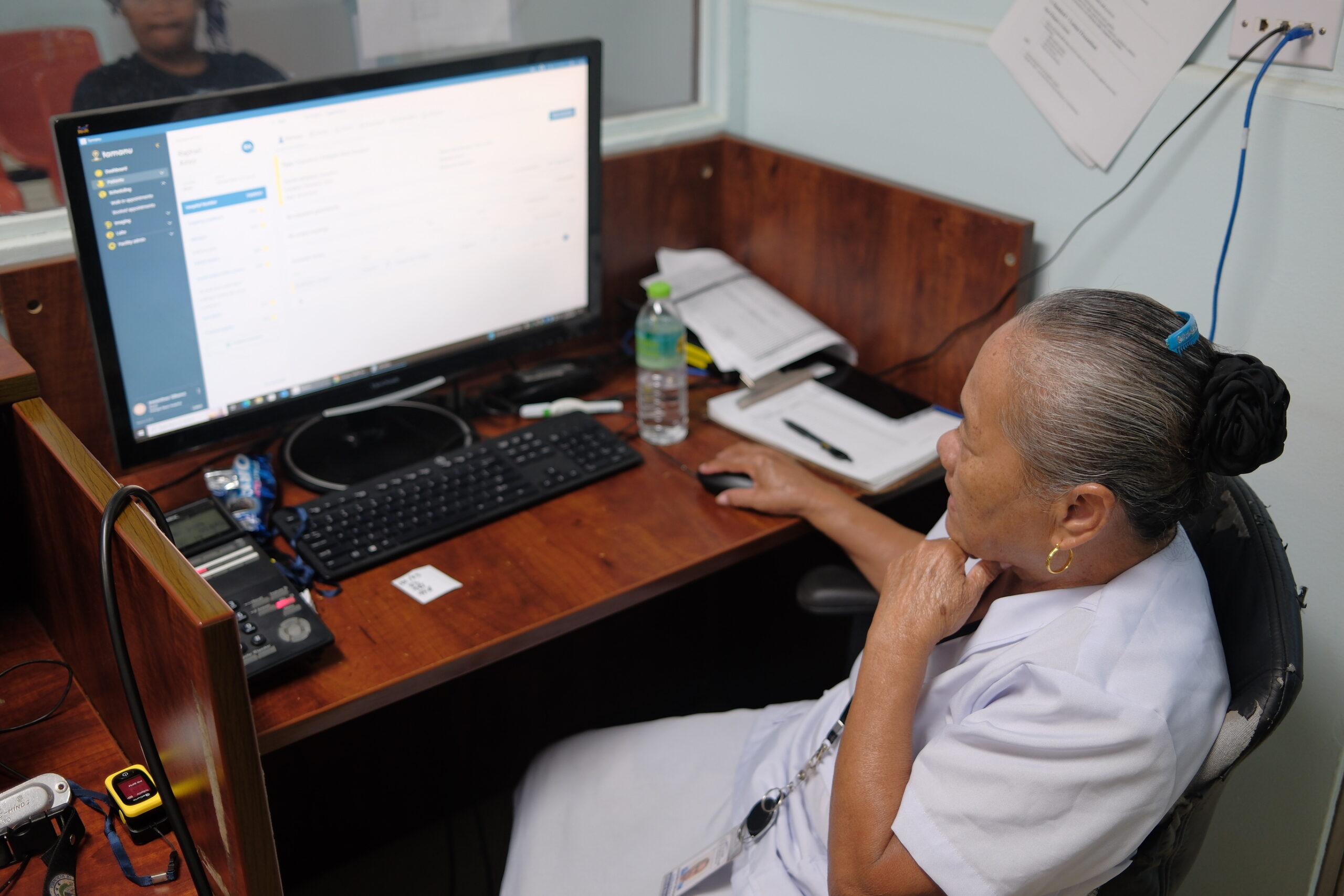
FSM had four separate instances of an electronic health record (EHR) system. Built on MySQL, patient’s health data flowed between the main hospital on-island, and with clinics and dispensaries on outer islands. What was needed was a unified health record to support continuity of care across the vast geographic region. A patient’s health data would not follow them if they transferred to another state’s hospital. BES worked closely with FSM’s Ministry of Health and Social Affairs to implement a complete migration from FSM’s legacy EHR to Tamanu (PostgreSQL).
What we did
The migration needed to be deliberately staged: state by state, and dataset by dataset. Starting with three of FSM’s four states (Yap, Pohnpei, Kosrae), Chuuk is the remaining state that is now underway.
The datasets were staged by core clinical records first, then procedures, labs, medications and imaging.
How we did it
First we extracted the data and reviewed it internally with no database writes. Next we migrated to a clone of the FSM environment for the MoH to verify. They say the devil is in the detail and this is where it starts to get complex. We used a record tracker to map every legacy record to its Tamanu record, solving the go-live problem: snapshot and migrate before go-live, snapshot again after, and migrate only what changed in the gap. Nothing lost, nothing duplicated.
The tracker also lets us keep building, attaching labs, medications and imaging onto patients and encounters migrated months earlier.
Finally we migrate to production after sign off, with two independent review gates. We profiled the source data for quality before and after transformation. AI also assisted matching mapped legacy free text procedures and medications onto standard code lists followed by human reviews.
Around 128,000 patients and 530,000 clinical encounters migrated across the three completed states, with records dating back to 2018.
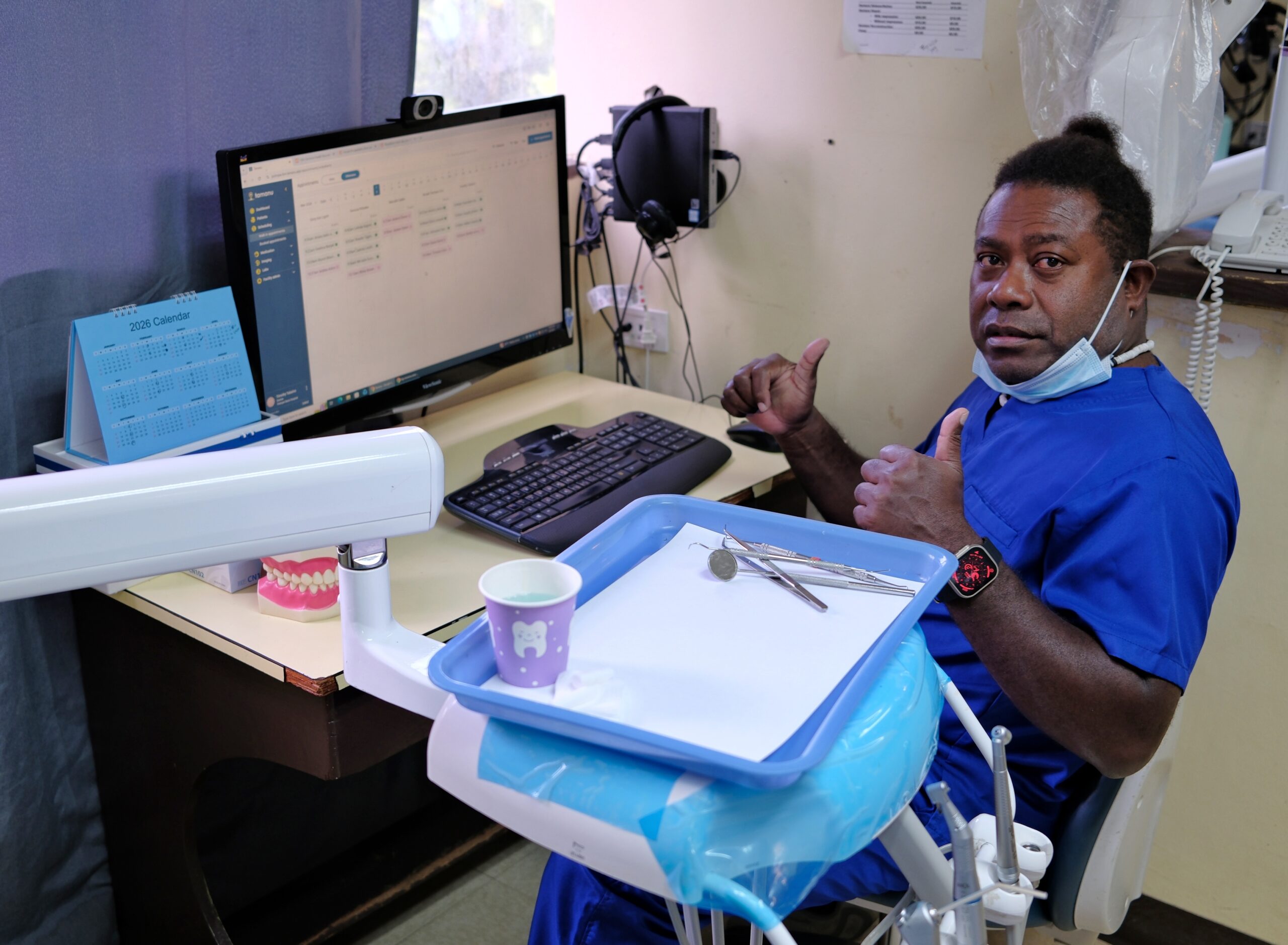
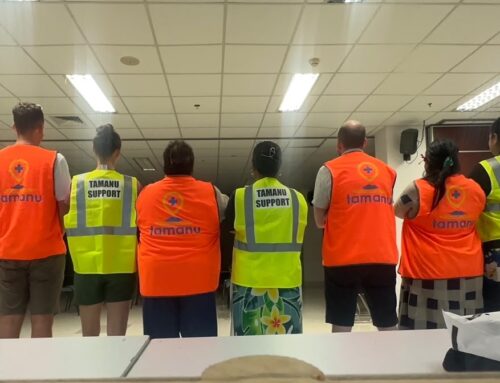
Two thumbs up! A dental technician from the dental clinic at Pohnpei State Hospital rates Tamanu.
Outcomes in health data migration
Continuity of care:
A clinician can open Tamanu from any state, with any patient’s history in place. This allows for a greater continuity of care from day one, strengthening the delivery of, and resulting in improved health outcomes of FSM’s public healthcare.
Data quality:
The aim was to leave data in better shape than we found it, and that has been achieved. Questionable records are now flagged to be addressed. There is also now eight-plus years of history available in Tamanu, including its in-product reporting. Every mapping and import is audited, enabling safe re-runs and targeted fixes.
Operational efficiency:
Change detection means each re-run only touches the records that have actually changed, so revisiting a state does not mean repeating the whole migration. Because this is one codebase with per-state configuration, each new state costs less to bring on than the last, and the pattern itself now doubles as a reusable playbook for future full EMR migrations.
No interruption to care:
Migrations of this size usually mean a maintenance window. Neither the legacy systems nor Tamanu was taken offline here. Extraction was read-only, so the legacy systems kept serving clinicians while we worked. On the Tamanu side, our importer was built to understand how Tamanu distributes data between its central server and each facility. Rather than loading records in one place and waiting for them to propagate across island internet links, we wrote to the central server and the state facility server together, marking each record so that Tamanu’s synchronisation treats it as already settled. Batches were small enough to keep the system responsive, and every import is repeatable.
What the future holds
Now that the health data is unified in a central database, we can expand into automated data analysis. This includes bringing in Tupaia, a health data visualisation tool, for visualising the health data, which updates regularly using an automated data pipeline.
Thank you
None of this would be possible without our donors and partners, including the Australian Department of Foreign Affairs and Trade through the Global Health Division and Partnerships for a Healthy Region (PHR) and the Federated States of Micronesia’s Department of Health and Social Affairs.
Congratulations to the local health information and IT teams in FSM who are leading the broader project, and to everyone at BES across FSM, Fiji, New Zealand, and Australia who supported them to get here.