Anatomy of a Go-Live
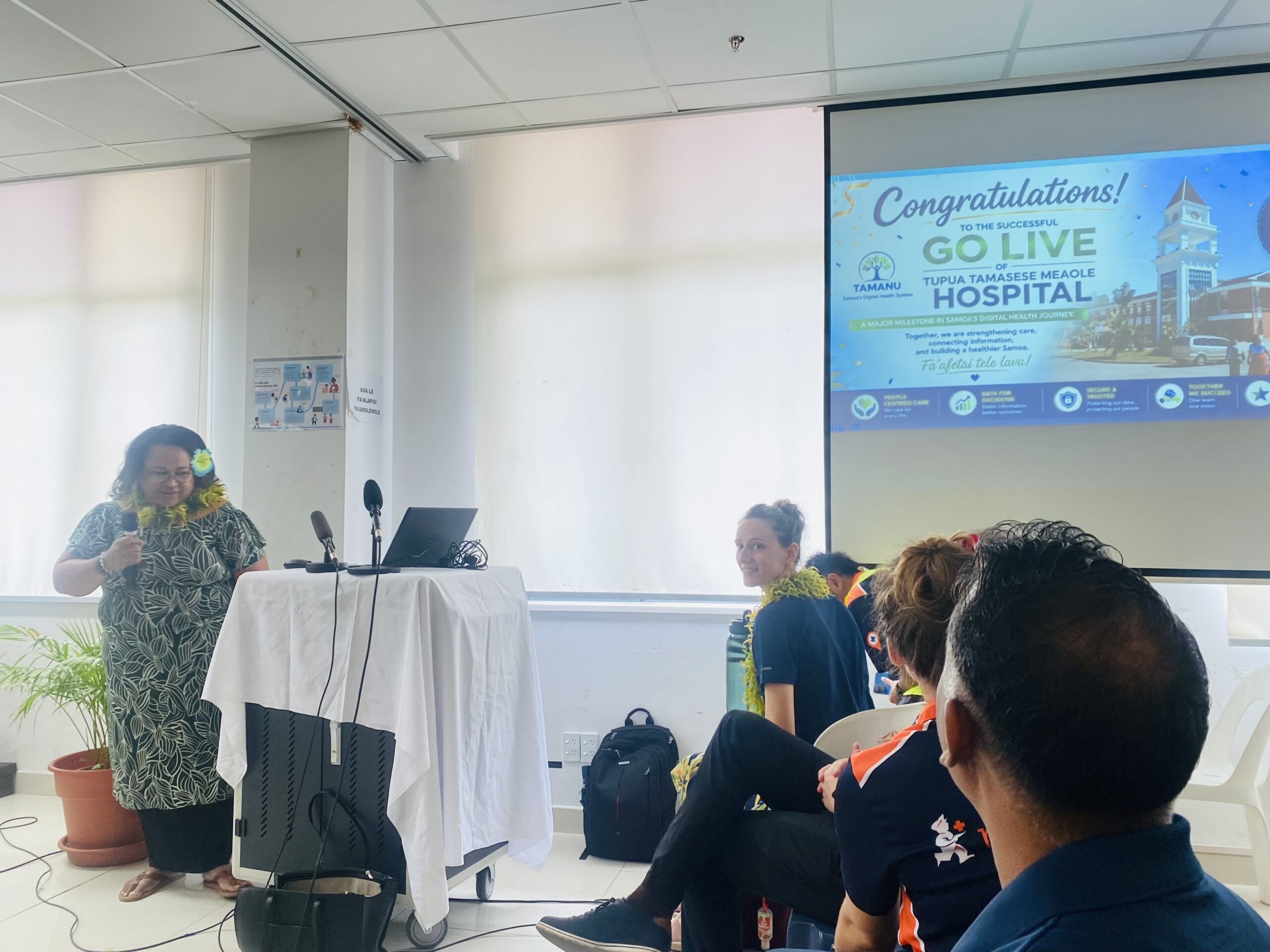
Last week, Tamanu EMR went live across all inpatient departments at TTM Hospital in Samoa. Nineteen wards and departments came online on the same day, across more than 300 staff, with usage increasing for workflows across the week. It was the biggest single-day go-live for a digital health project in the Pacific this year, and the culmination of 12 months of work.
For anyone outside the digital health sector, a “go-live” might sound like flipping a switch. In reality, it is closer to a small, carefully choreographed operation, and one that looks very different depending on where in the world it happens.
The basics
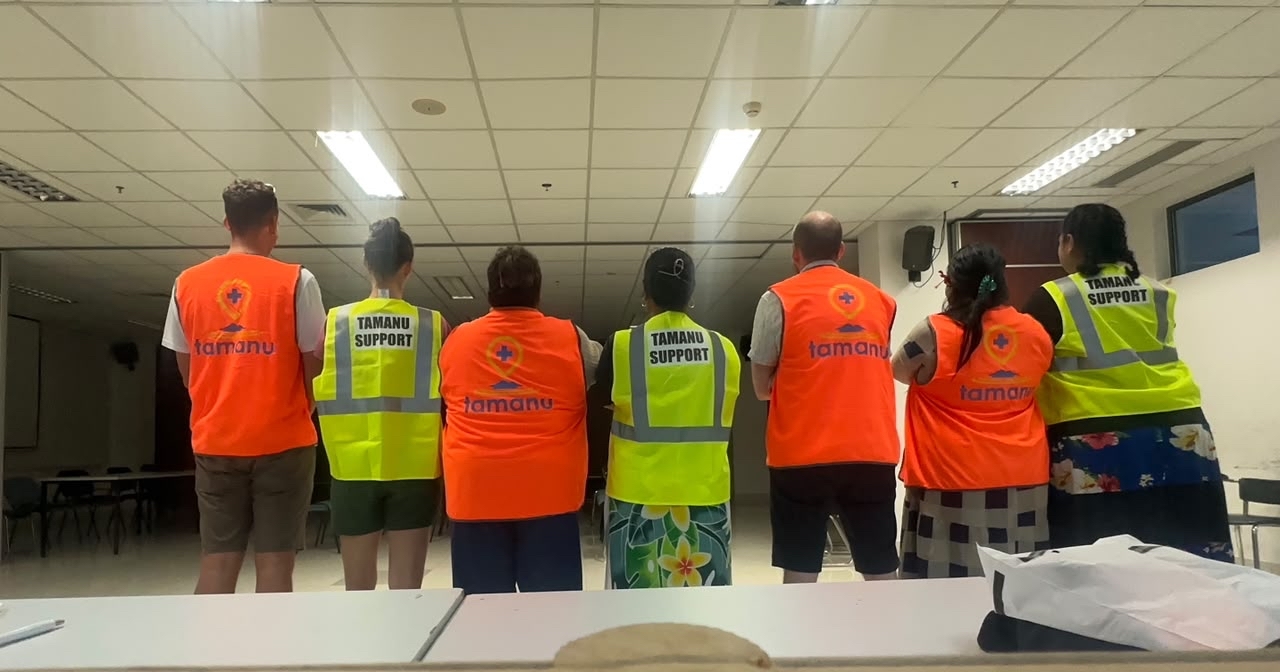
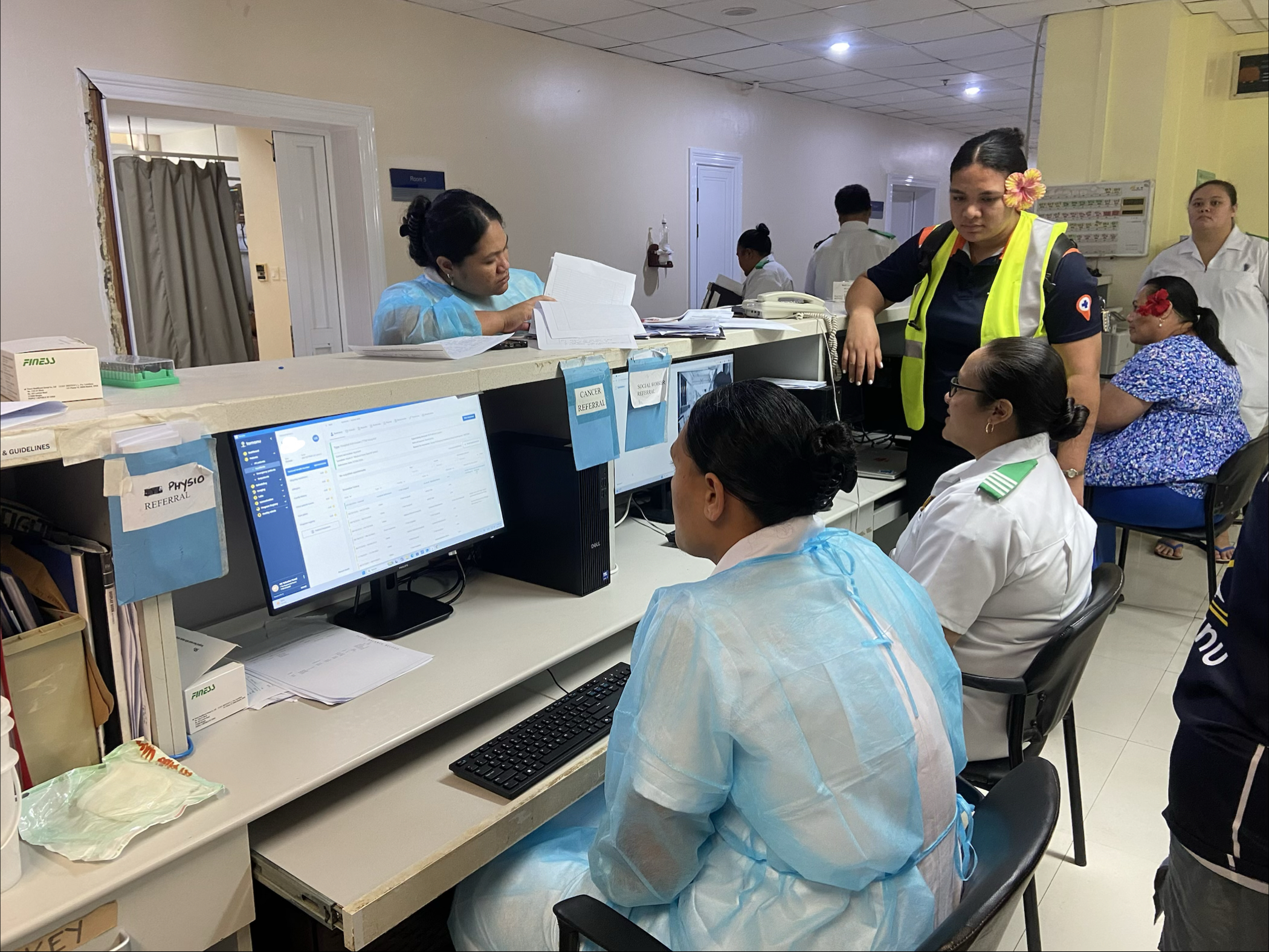
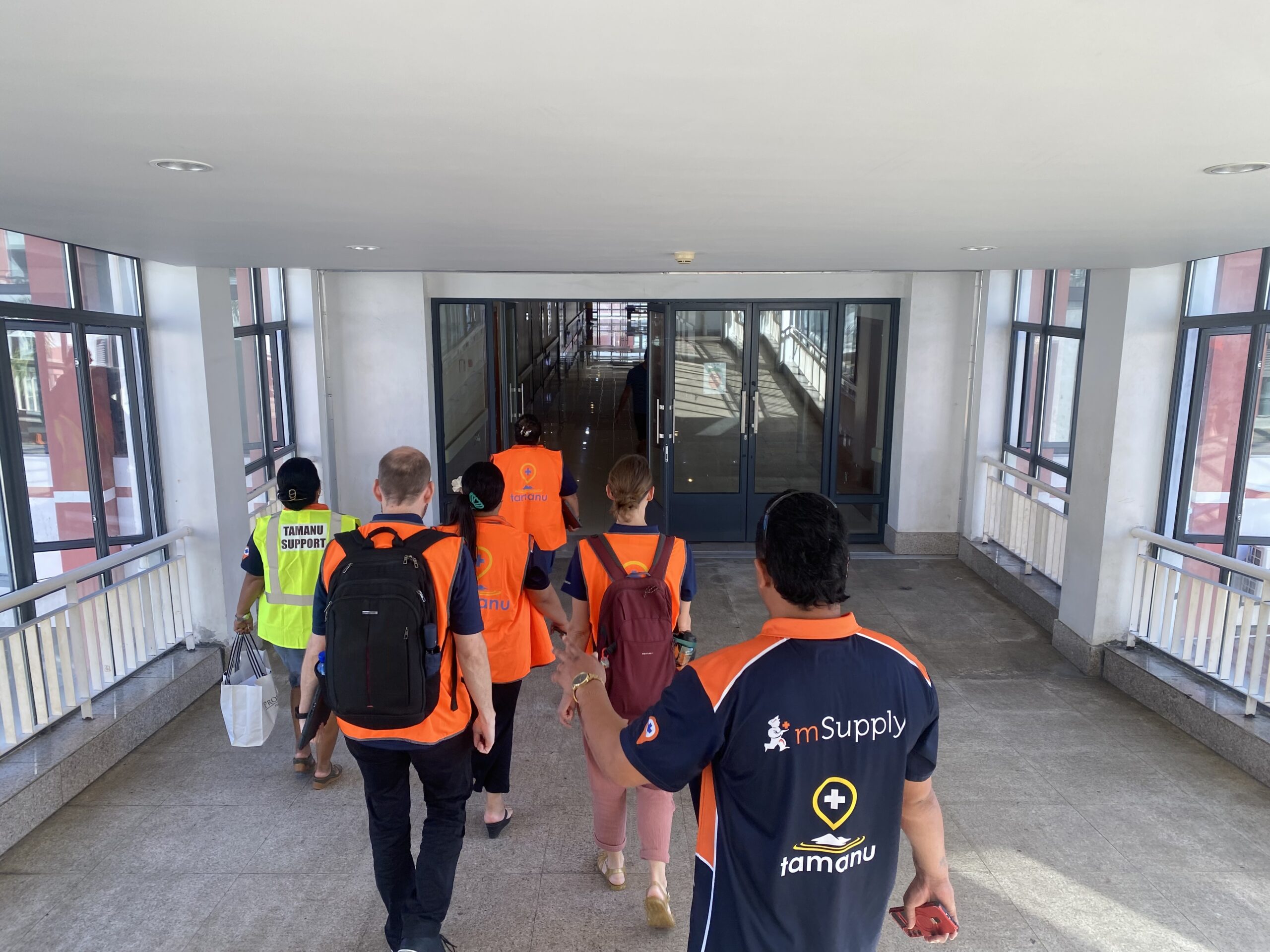
The formula we aim for is always the same… after months of build-up, the Go-Live team arrives at the hospital in the week leading up to the big day. This is comprised of an international team from BES, put together with a local team of Change Champions from (in this case) Samoa. The team will wear high-vis vests throughout the week and be stationed throughout the hospital supporting staff, answering questions and identifying issues. Any problems are shared via messaging apps with the control room, staffed by a senior Project Manager and local IT staff. In Samoa, we supplemented this with a ‘virtual’ control room based in Suva, who were on rotation with one staff member allocated full-time to Samoa throughout the entire week.
The night before, the team meets for pizza and a final walk-through of the hospital, testing equipment and network access. Ribbons and balloons go up, the final ‘thumbs up’ decision is taken, senior staff are informed and at 6am on the day of Go-Live, Tamanu blinks to life.
Smooth sailing? Never! But with the right resourcing, calm staff and a lot of laughter, everything is manageable.
Go-lives are not the same everywhere
In a very highly-resourced hospital system, a go-live might come with a budget in the millions, a dedicated project office, and months of parallel running between old and new systems. In the Pacific, that model simply does not exist, and trying to force it rarely works.
At TTM, the same outcome – that is, a safe, complete transition to digital records across a 200-bed tertiary hospital – has to be achieved with a fraction of the resourcing. Every hour of planning has to count, every risk has to be understood in context and anticipated in advance and the people on the ground have to be trusted to make real-time decisions when something doesn’t go to plan. Lower-resourced does not mean lower-standard. It means different, and it means smarter.
People who understand context matter more than credentials
One of our clearest lessons from years of Pacific go-lives is that technical skill alone does not get you through the experience. The staff who make the biggest difference during a go-live are the ones who have worked in similar clinical and public health environments before, and who understand what it means to run a busy ward with limited staff, intermittent power, or a shared laptop between three nurses. Air conditioners leak, members of the public might have greater access to sensitive areas of the hospital, family priorities can pull crucial staff away at inopportune times, rain sometimes falls inside the building, rats chew through cables in the ceiling… none of those are a crisis, that’s just a normal Monday.
Placing people with that lived experience alongside local teams changes the dynamic of a go-live entirely. It is the difference between a support person who can only follow a script and one who can look at a ward at 7am and immediately understand what is about to go wrong, keep their sense of humour, roll up their sleeves and just help.
Local teams lead, we support
It is easy to frame a go-live around the visiting support staff. But the truth is that these projects are led by local health information and IT teams, not by BES. Our staff are there to back them up, not to run the show.
That distinction matters throughout the months of preparation before a go-live, and just as much on the day itself. The relationship with local teams, built over months of requirements gathering, configuration, testing, and training, is what allows a go-live to hold together under pressure. Without that trust, no amount of external support can make up the difference.
No half measures
Perhaps the hardest lesson to apply, and the easiest to get wrong, is that a go-live has to be all-in. If clinical data is allowed to move back and forth between paper and digital systems, even temporarily, the project is in trouble. Staff quickly learn which system is “real,” duplicate records creep in, and the continuity of care the system was meant to improve starts to break down instead.
At TTM, that meant a genuine cut-over. By the end of week one, every incoming patient had a fully digital experience, with handovers, triage, bed management, clinical care, and clinical administration all running through Tamanu. There is no fallback to paper.
Of course, there are still paper workflows in the hospital – forms that were missed, practices which are hard to break, departments which are more complex than others. That’s why the Go-Live isn’t the end of the story, it’s just the start. There are still months of work ahead, making sure that the new systems adapt to the workflows (and vice versa) until everything works seamlessly.
A genuinely regional effort
Last week’s go-live was also a reminder of how connected the Pacific digital health workforce has become. Staff from New Zealand, Fiji, Australia, and Samoa worked together on the ground and remotely, including through a virtual control room based at our regional support centre in Suva, supporting the Samoa Ministry of Health IT team in Apia.
This regional model matters. It means expertise built in one country’s health system can be shared with another. TTM becomes the sixth national hospital in the Pacific to implement Tamanu across all departments, and the second largest hospital to use the system. The cohort of staff that is building are mutually supporting and represent a very real peer-to-peer network which can eventually take BES out of the loop.
Twelve months in the making
Last week did not happen overnight. It followed 12 months of preparation, with the last four in particular given over to intensive requirements gathering, configuration, testing, and training, all underpinned by a broader change management strategy. Over the same period, the team also delivered go-lives at more than ten smaller facilities and outpatient departments across Samoa, each one building the experience and confidence that made today possible.
On the ground in Apia, the day itself scaled up gradually. Final hardware inspections were completed on Sunday night. On Monday morning, staff worked side by side with local teams to migrate current inpatients ahead of each critical shift change, and ward rounds were digitised progressively across the first 48 hours. Support will continue through July, starting with five BES staff on the ground and reducing progressively to one project manager as the local team takes full ownership.
After that, the focus shifts from go-live support to something arguably more important: using the data now being captured for evidence-based decision making and improved clinical care.
What the data already shows
Even before today, Tamanu’s impact in Samoa was measurable. Since the system was first introduced in 2021, more than 1.2 million encounters and 4.6 million clinical events have been recorded across Samoa’s public health facilities. More than 210,000 patients have had more than one encounter in the system, and for 74,000 of those patients, encounters spanned different facilities, a strong signal that longitudinal, connected care is genuinely happening.
More than 900 users now work using Tamanu, from clinicians to public health and health information staff. TTM’s go-live adds a national tertiary hospital to that picture, with 24/7 digital records now underpinning emergency care, paediatrics, ICU, and surgical theatres.
Thank you
None of this would be possible without our donors and partners, including the Australian Department of Foreign Affairs and Trade through the Global Health Division and Partnerships for a Healthy Region (PHR), the World Bank Group, and the Tautua Human Development for All Program, delivered by Palladium.
Congratulations to the local health information and IT teams in Samoa who led this project, and to everyone across Samoa, Fiji, New Zealand, and Australia who supported them to get here.