





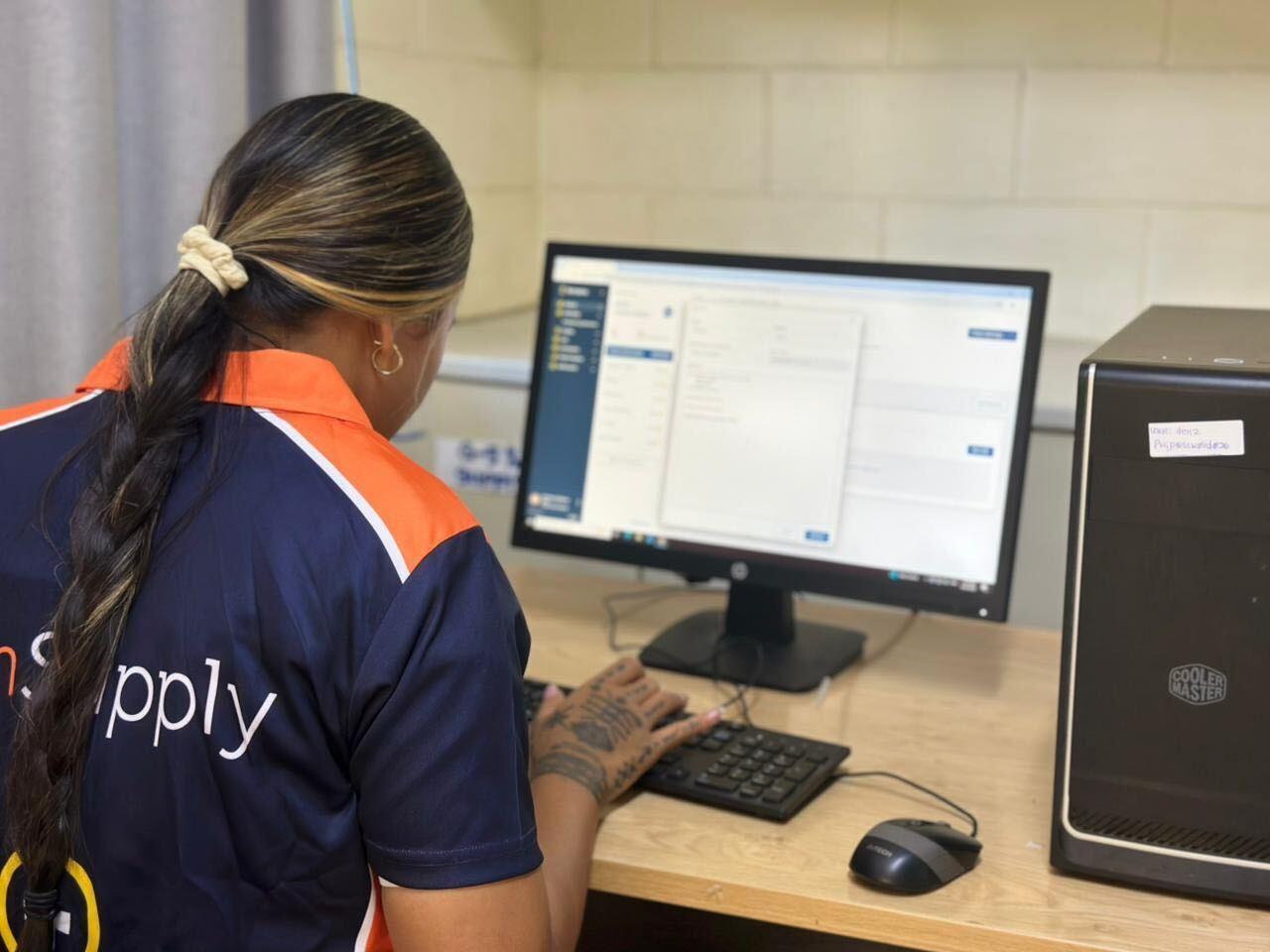
Two women walk into clinics 50km apart from each other. Each of them is there for their first antenatal visit and each of them is assessed and cared for by a trained, dedicated nurse.
These two clinics can see seemingly identical women, seeking the same service… and yet can record different care – and when it comes to reporting still not count these events as the same thing. Between a patient visit and a published number, data passes through many hands – facility staff entering patient notes, clinical guidelines used to guide care, health information staff extracting data against standards, and analysts interpreting it. Every step is a chance for definitions to drift.
WHO’s Digital Adaptation Kits are designed to stop that drift, and Tamanu, our free and open-source EMR, now has templates for all 10 of them.
Where SMART Guidelines come in
This is where WHO’s SMART Guidelines come in, along with their Digital Adaptation Kits (DAK). These are WHO’s approach to turning health recommendations into something software can follow. Each DAK sets out the data to be recorded at each step of care and the indicators used to monitor a programme. They are written in a software-neutral way, so any system can be built from them.
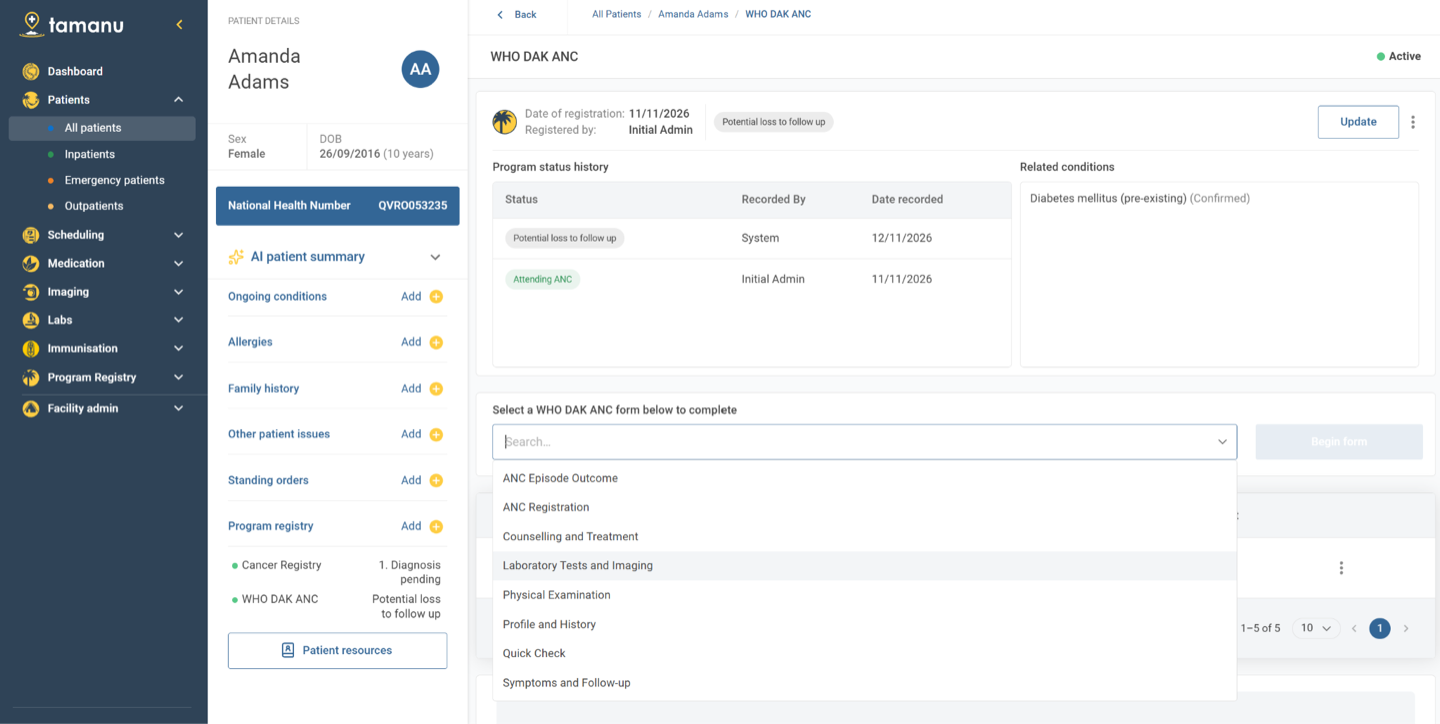
Tamanu, our free and open-source EMR, now has templates for all 10 of WHO’s DAK. The forms are built and ready to be uploaded to any Tamanu deployment, so standard WHO indicators can come straight from the patient record.
How it works: antenatal care
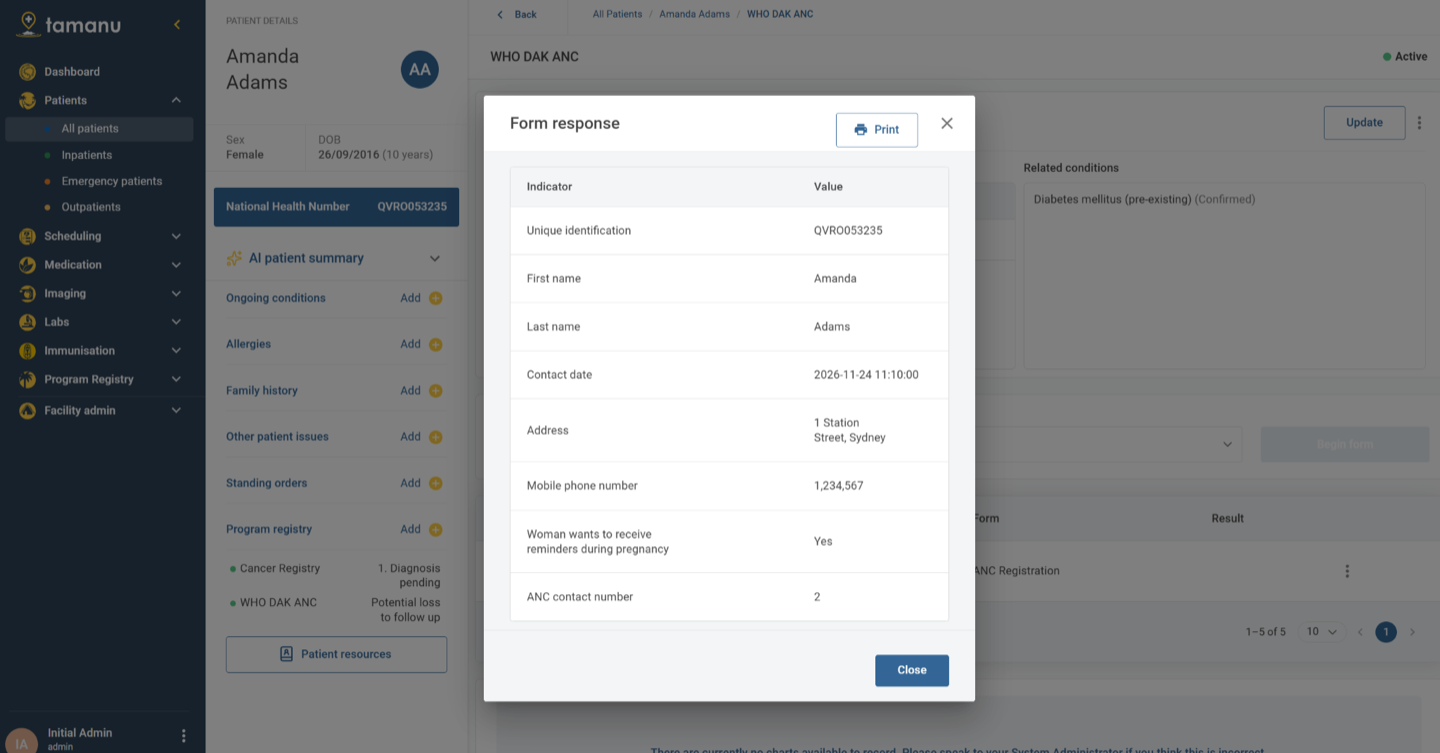
Back to those two clinics. In Tamanu, the clinician records the fields WHO specifies, such as gestational age and date of first visit, and these are coded to feed directly into the indicator – in this case, the percentage of pregnant women whose first ANC contact was before 12 weeks. WHO indicator reports can then be generated directly from Tamanu. Both clinics count the same way, because the definition uses standards built into Tamanu.
Why standard definitions matter
Standard definitions matter most when numbers are compared. Ministries compare clinics, districts and years, and regional partners compare countries. That only works if everyone counts the same events in the same way.
Tamanu’s reports can now be built on the DAK indicators, so its data follows WHO’s definitions from the start. That not only ensures consistent, evidence-based care, the standardised data can then feed whichever reporting system a ministry already uses, such as DHIS2 or Tupaia. The added bonus? When it comes time to produce reports for WHO, Tamanu can now be aligned with common indicators globally.
Better data is not the end goal; better care is. When everyone counts the same way, ministries can spot gaps sooner and act on them, and health workers can spend less time tallying and more time with patients.
If your Ministry of Health would like to be one of the first to put this into practice, contact your project manager or contact@bes.au to find out more about how it can be implemented.